
Beart Mhòr restoration
6th May
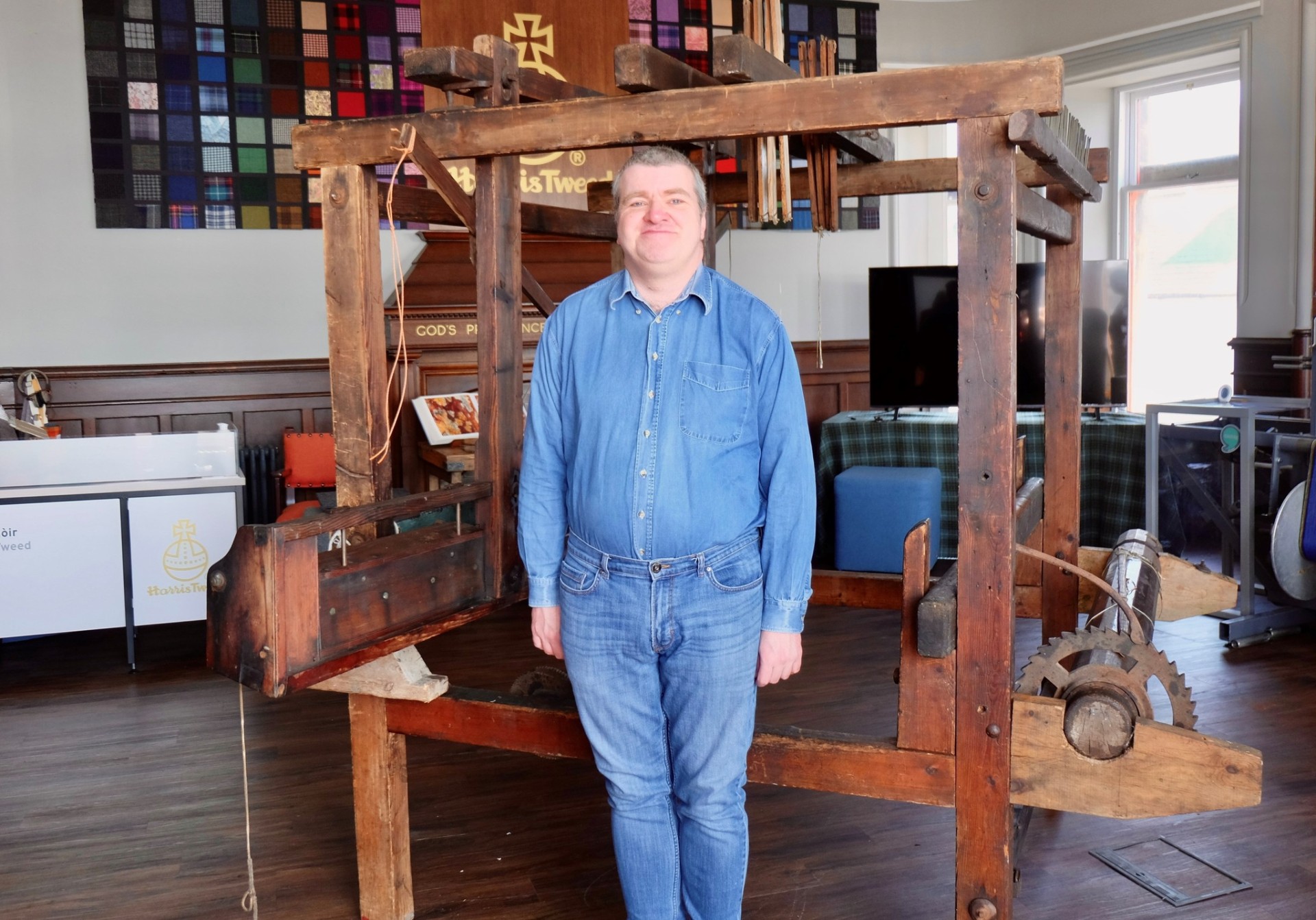
The HTA Educational Trust was hugely honoured and grateful to have been gifted the late Ronnie Mackenzie’s Beart Mhòr (wooden loom) by his son Andrew following his father’s death in 2022. This cherished loom now resides in our Story Room in Stornoway Town Hall where his many friends, far and wide, can come and reminisce about their time with Ronnie in the emporium that was Lewis Loom Centre.
Ronnie’s shop was a much-loved destination for both locals and international visitors, which drew people back year after year to witness his expertise and passion for storytelling. His demonstrations on the wooden and Hattersley loom, paired with his knowledge of the island and Harris Tweed®️ industry generally, left an indelible mark on all who met him.
Visitors to the island can also now come and see the Beart Mhòr and learn about its history and significance, continuing Ronnie’s tradition of sharing knowledge of Harris Tweed®️. We believe this is the first time and the only place a Beart Mhòr, a Hattersley single width and a Griffith double width loom have sat side-by-side showing the three generations of work horse which have held up our unique industry over the last 180 years.
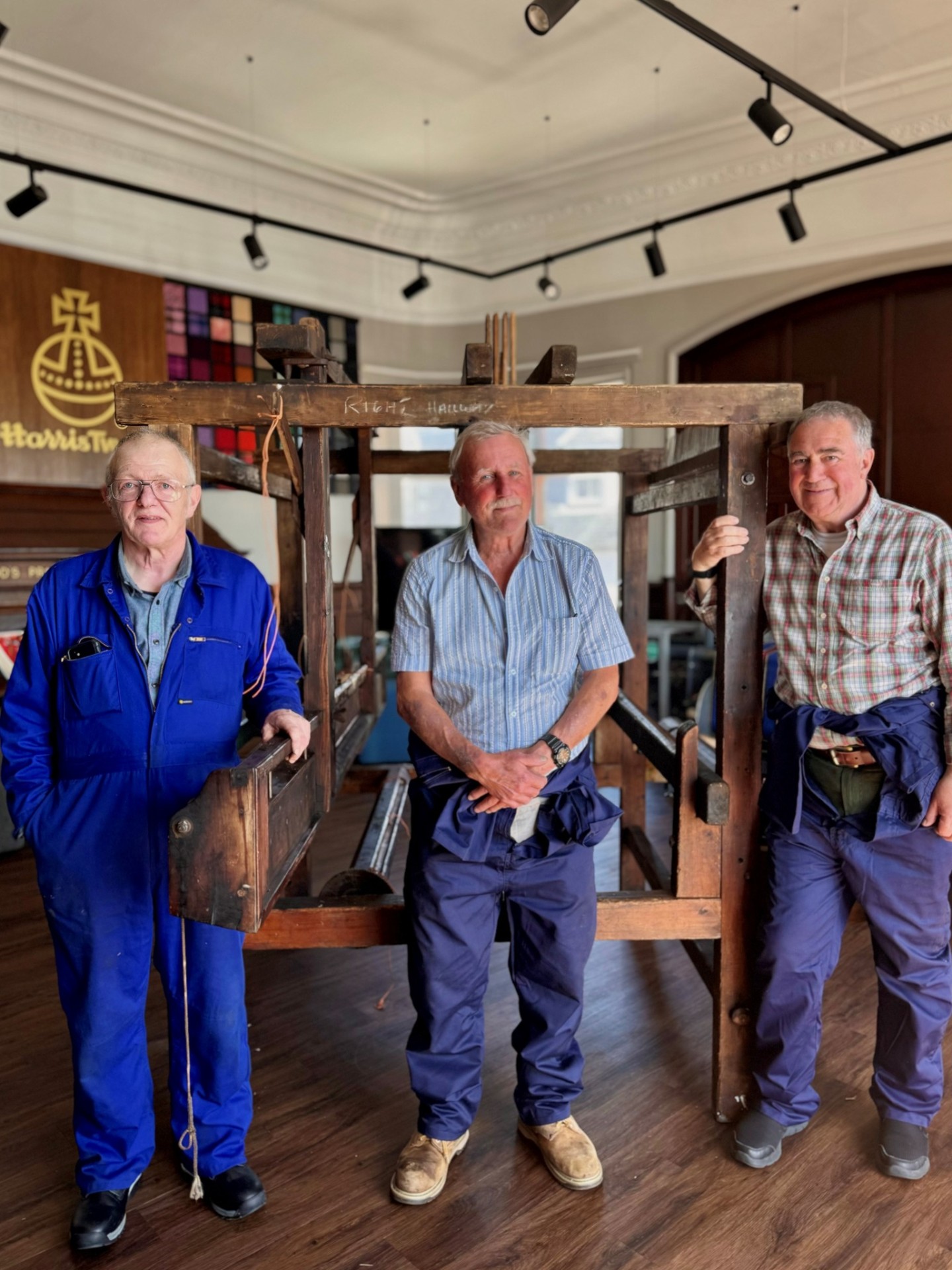
The HTA wish to sincerely thank our friend and fellow weaver Murdo ‘Murdie’ Macleod, who took on the task of refurbishing Ronnie’s Beart Mhòr in honour of his late friend and colleague. After a brief retreat in the village of Leurbost on the east side of the island, where the loom received Murdie’s careful attention and restoration, it was returned to its new custodians here in Stornoway Town Hall. Murdie, along with our two stampers, Calum S and Calum R, reassembled the loom just in time for the opening of the Story Room today.
Next week, we will share more on the history of the Beart Mhòr and its place in the Harris Tweed story.
Photos: Andrew Mackenzie with Beart Mhòr / Murdo Macleod, Calum Stewart and Calum Richings